Skip to content

Book#

From Evaluation to Integration: How AI Became Ready for Children's Book Production

"Cliché, my dear parrot! Cliché!"

That was my assessment in January 2023, watching ChatGPT reach for the tired apple-falling-on-Newton's-head trope when I asked it to write a children's book about physics. The verdict was clear: the technology wasn't ready. Not because AI couldn't eventually augment creative work—that was always the obvious trajectory—but because the 2023 output quality was too poor for augmentation to be meaningful. You can't build on a foundation that produces intellectually shallow, pedagogically unsound content. Adding AI assistance to a broken core would only scale the problems.

Two years later, the calculus has changed. I've built FableFlow, an open-source agentic AI pipeline for children's book production, and repositioned the entire Curious Cassie series around AI-augmented storytelling.

This post examines what changed technically, what remains problematic, and what this evolution means for authors, publishers, and the broader question of AI in creative domains.

The 2023 Assessment: What Held Up and What Didn't

Re-reading my original piece provides a useful benchmark for how the technology has evolved.

Assessments That Held Up

1. Content Quality Was Insufficient ChatGPT in January 2023 produced narratives that were structurally competent but intellectually hollow. When prompted to write about Newton's discoveries, it delivered the apple cliché and surface-level explanations of the laws of motion. The content lacked what educators call "productive struggle"—the carefully calibrated cognitive challenges that build genuine understanding. This assessment was correct: using that output as a foundation for augmentation would have produced polished mediocrity at best.

2. Governance Gaps Remain I noted that society wasn't ready for AI-generated children's content. This has proven accurate. The past two years have seen an explosion of AI-generated children's books on content platforms — much of it low-quality, some containing hallucinated or inappropriate content that slipped past moderation. The governance frameworks remain inadequate, and the flood of AI-generated content has created signal-to-noise problems for parents and educators.

3. Cognitive Offloading Risk The concern about "depleting creative and critical thinking abilities in favour of convenience" remains valid. The ease of AI generation creates genuine risk of cognitive offloading—similar to how GPS navigation has measurably reduced spatial reasoning capabilities in regular users. This requires ongoing vigilance in how AI tools are designed and used.

Where the Analysis Was Incomplete

1. The Framing Was Too Narrow The original piece was titled "ChatGPT vs Me"—framing the question as whether AI could match human authorship. This was the wrong frame. The interesting question was never about replacement but about composition: what becomes possible when human creative vision is combined with AI production capability? In 2023, the answer was "not much, because the AI components aren't good enough." By 2025, that answer has changed substantially.

2. Underestimating Improvement Velocity The jump from GPT-3.5 to GPT-4 to Claude 3.5 to current frontier models isn't just quantitative—it's qualitative. Instruction-following, long-context coherence, and iterative refinement capabilities have crossed thresholds that enable genuine collaboration rather than simple generation-and-evaluation cycles. The technology moved faster than my 2023 assessment anticipated.

3. Missing the Production Economics This was the biggest gap in the original analysis. I focused entirely on narrative generation while ignoring the actual economics of children's book publishing. A manuscript is perhaps 10% of a finished children's book. The remaining 90% is illustration ($3,000-$15,000), professional narration ($2,000-$5,000), layout, formatting, and months of vendor coordination. For independent authors, these costs are prohibitive. This is where AI has proven most transformative—not by writing stories, but by making professional production accessible to authors who couldn't previously afford it.

The Technical Evolution: From Conversational Prompting to Agentic Pipelines

The shift from ChatGPT conversations to FableFlow represents more than a tool upgrade—it's a fundamentally different architecture for human-AI collaboration.

The Ceiling of Conversational Interfaces (2022)

The 2022 experiments used progressively refined prompts—from generic requests to detailed specifications including protagonist names, scientific concepts, chapter structure, and illustration guidance. The results improved with better prompting, as expected with any ML system.

But conversational interfaces have a fundamental ceiling: they treat generation as a single transaction. You prompt, the model generates, you evaluate. Even with sophisticated prompt chains, you're operating in request-response mode. The model has no persistent understanding of your project, no memory of what worked in previous iterations, no awareness of how this chapter connects to the arc of the book.

Write a 6-7 year old kids chapter book on Sir Isaac Newton's
discoveries with Cassie as the protagonist with illustrations

This was the most refined prompt in those 2022 experiments. It produced competent output—appropriate tone, reasonable structure, the expected Newton-apple connection. But "competent" isn't the bar for children's educational content. The model couldn't understand why I wanted to teach physics through narrative, couldn't calibrate cognitive scaffolding for genuine learning, couldn't maintain character consistency across scenes it generated independently. At that quality level, augmentation would have meant scaling problems rather than solving them.

Agentic Pipeline Architecture (2025)

FableFlow implements a fundamentally different paradigm: a multi-stage production pipeline where specialized AI agents handle distinct aspects of book production, with human oversight at critical decision points.

Crucially, FableFlow is fully open source and deliberately built on open-source models. This is not merely a technical choice—it's a philosophical stance. Advancements in AI-assisted creative tools carry profound implications for authorship, accessibility, and the democratization of publishing. Such transformative capabilities deserve openness: open code that can be audited, extended, and improved by the community; open models that don't lock creators into proprietary ecosystems; and open processes that allow others to learn from and build upon this work. The alternative—powerful creative AI tools controlled by a handful of corporations—concentrates capability in ways that undermine the democratization these tools could enable.

┌─────────────────────────────────────────────────────────────┐
│                    HUMAN AUTHOR                             │
│              (Manuscript + Creative Vision)                 │
└─────────────────────┬───────────────────────────────────────┘
                      │
                      ▼
┌─────────────────────────────────────────────────────────────┐
│               STORY PROCESSING AGENT                        │
│  • Structural analysis and refinement                       │
│  • Age-appropriate vocabulary calibration                   │
│  • Pacing and engagement optimization                       │
└─────────────────────┬───────────────────────────────────────┘
                      │
          ┌──────────┴──────────┬──────────────────┐
          ▼                     ▼                  ▼
┌─────────────────┐  ┌─────────────────┐  ┌─────────────────┐
│  ILLUSTRATION   │  │   NARRATION     │  │     MUSIC       │
│     AGENT       │  │    AGENT        │  │    AGENT        │
│                 │  │                 │  │                 │
│ • Scene extract │  │ • TTS synthesis │  │ • Score comp.   │
│ • Style consist │  │ • Voice match   │  │ • Mood align    │
│ • Character     │  │ • Pacing        │  │ • Theme         │
└────────┬────────┘  └────────┬────────┘  └────────┬────────┘
         │                    │                    │
         └────────────────────┼────────────────────┘
                              ▼
┌─────────────────────────────────────────────────────────────┐
│                  ASSEMBLY AGENT                             │
│  • Multi-format output (EPUB, PDF, HTML, Video)             │
│  • Asset synchronization                                    │
│  • Quality validation                                       │
└─────────────────────────────────────────────────────────────┘

This architecture embodies several key principles:

Separation of Concerns: Each agent is optimized for a specific production task, allowing targeted prompt engineering and output validation for each stage.

Human-in-the-Loop by Design: The pipeline doesn't attempt to replace human creativity at the conceptual level. The manuscript—the story's core intellectual content—remains entirely human-authored. AI augments execution, not conception. Critically, FableFlow Studio provides an interactive workspace where I can review, refine, and iterate on every generated asset—comparing versions side-by-side, adjusting prompts, and re-running individual stages until the output meets my standards. This iterative refinement loop transforms the relationship from "accept or reject AI output" to genuine creative dialogue, where each iteration builds on the previous to converge on the intended vision.

Composability: Individual stages can be re-run, adjusted, or bypassed. If AI-generated illustrations don't meet quality standards, they can be regenerated or replaced with human artwork without rebuilding the entire pipeline.

Reproducibility (Mostly): While LLM outputs are inherently stochastic, the pipeline structure provides reproducible workflows. The same manuscript processed through the same pipeline configuration will produce structurally similar outputs, even if specific generated assets vary.

What AI Actually Does Well (and Poorly) for Children's Literature

After two years of building, iterating, and producing actual books with AI assistance, I've developed a practitioner's understanding of where AI helps and where it fails. This isn't theoretical—it's learned through hundreds of generation attempts, countless iterations, and the humbling experience of showing AI-assisted work to real children.

Where AI Excels

1. Production Automation This is the game-changer. Traditional children's book publishing economics are brutal for independents: professional illustration ($3,000-$15,000), quality narration ($2,000-$5,000), specialized layout skills, and months of vendor coordination. Most aspiring children's authors never publish because they can't afford to. AI compresses this timeline from months to days and reduces costs by 10-100x. This isn't about replacing human creativity—it's about removing barriers that kept most voices out of the conversation entirely.

2. Iterative Refinement AI's capacity for rapid iteration transforms the editorial process. A paragraph can be tested at multiple reading levels, with different vocabulary choices, in minutes rather than days. This enables a form of A/B testing for narrative structure that was previously impractical.

3. Multi-Modal Synthesis Modern AI can maintain reasonable consistency across text, image, and audio generation within a unified production context. While not perfect, this coherence enables true multimedia storytelling that was previously accessible only to well-funded production teams.

4. Accessibility Enhancement AI-generated narration enables audio versions of every book. Multiple output formats (EPUB, PDF, HTML, video) serve different accessibility needs. This breadth of format support represents genuine value for diverse learners.

Where AI Falls Short

1. Deep Domain Expertise The books aim to teach scientific concepts accurately—not "approximately correct for a children's book," but genuinely accurate. AI models exhibit a characteristic failure mode: plausible-sounding explanations that are technically wrong in ways that matter pedagogically. Newton's laws, for instance, are commonly described in ways that conflate force and momentum, or that present the laws as separate discoveries rather than a unified framework. These aren't minor quibbles—they're the kind of subtle errors that create misconceptions children carry into formal physics education. This is a well-understood limitation: language models optimize for surface coherence, not factual precision in domain-specific contexts. Human domain expertise remains essential for educational content.

2. Pedagogical Sophistication Effective children's education isn't about simplified explanations—it's about carefully sequenced cognitive scaffolding. The difference matters enormously. Good children's science writing presents concepts in an order that builds on prior understanding, introduces "productive confusion" at strategic moments, and creates space for the child to reason before revealing answers. AI models optimize for immediate coherence and resolution—they'll explain the answer before the child has struggled with the question. This is a fundamental architectural mismatch: transformers generate text by maximizing local likelihood, while genuine learning requires productive struggle and delayed gratification. No amount of prompt engineering resolves this; it's inherent to how these models work.

3. Cultural and Emotional Nuance Children's literature often conveys subtle messages about values, relationships, and social dynamics. AI-generated content tends toward generic emotional beats and can miss cultural nuances that give stories authentic resonance for specific communities of readers.

4. Character Consistency in Illustration This is the technical challenge that has consumed the most iteration cycles. Children's books require the same characters to appear consistently across dozens of scenes—Cassie should look like Cassie whether she's in a car, at the beach, or peering through a telescope. The underlying problem is architectural: diffusion models generate images from noise conditioned on text embeddings, with no persistent representation of "this specific character." Each generation is essentially independent, leading to drift in facial features, clothing details, and proportions.

FableFlow prioritizes open-source models like FLUX, but even the best open-source options today lack robust character persistence mechanisms. Commercial offerings from Google and Leonardo.Ai have made strides with reference image conditioning and character locking features, but the gap between open-source and commercial capabilities remains significant here. This is an active area of research—techniques like DreamBooth fine-tuning and IP-Adapter conditioning show promise—but for now, character consistency requires extensive manual curation and sometimes strategic acceptance of stylistic variation as a feature rather than a bug.

5. Physics and Spatial Reasoning AI-generated images occasionally violate basic physics—objects floating impossibly, shadows cast in wrong directions, hands with six fingers, limbs at anatomically improbable angles. These failure modes emerge from how diffusion models learn spatial relationships from 2D training data without explicit 3D world models.

The good news: this has improved dramatically. FLUX and recent models produce far fewer egregious errors than earlier generations like Stable Diffusion 1.x. Commercial models have improved even faster. But "fewer errors" isn't "no errors," and for educational content about physics, every image requires careful human review. There's a particular irony in illustrating Newton's laws with images that violate them.

6. Genuine Novelty Perhaps most fundamentally: AI models generate variations on patterns in training data. They don't invent new genres, challenge conventions, or take creative risks that might alienate some readers while deeply connecting with others. The boundary-pushing work that advances children's literature as an art form remains irreducibly human.

Any serious discussion of AI in creative domains must address intellectual property. I want to engage this directly, without the evasion that characterizes much industry discourse on the topic.

The Training Data Problem

Let's be precise about what happened: generative AI models were trained on internet-scale corpora that included copyrighted works without explicit licensing. The companies that built these models made a calculated bet that this training constituted fair use (or equivalent doctrines in other jurisdictions). That bet is being tested in courts worldwide—Getty v. Stability AI, New York Times v. OpenAI, and dozens of other cases working through the system.

I'm not going to pretend this is settled or unproblematic. The models I use in FableFlow inherited capabilities from training on others' creative work. The legal frameworks are evolving. Different jurisdictions are reaching different conclusions.

My current position: I use AI as a production tool while ensuring the core intellectual property—stories, characters, educational frameworks, pedagogical structure—are my original creations. The AI-generated assets are styled to my specifications, iteratively refined under my direction, and integrated into works where the creative vision is demonstrably mine. This resembles how a traditional author might commission illustrations from an artist who learned by studying other artists' work—but I acknowledge the analogy is imperfect, and I hold my position loosely as legal and ethical norms continue developing.

Authorship and Attribution

Who is the author of an AI-assisted book? I claim authorship of Curious Cassie works because:

  1. The narrative content, characters, and educational framework are my original creations
  2. I provide detailed direction for AI-generated components
  3. I exercise editorial judgment in selecting, refining, and approving all outputs
  4. The overall creative vision and pedagogical intent are mine

This resembles traditional authorship more than it differs. Authors have always relied on editors, illustrators, typesetters, and other collaborators. AI is a new category of collaborator with different capabilities and limitations.

However, I'm transparent about the AI-assisted nature of production. Readers deserve to know how content was created. As norms evolve around AI disclosure, I'll adapt my practices accordingly.

The Homogenization Risk

A subtler concern, and one that keeps me up at night: if many authors use similar AI tools trained on similar data, we may see convergence in children's literature. The statistical nature of these models means they'll tend toward modal outputs—the most common patterns in training data. Over time, this could narrow stylistic diversity, creating a literature of pleasant mediocrity where everything reads like a competent average of everything else.

This isn't hypothetical. Browse Amazon's children's book section and you'll already see the early signs: AI-generated titles with suspiciously similar illustration styles, narrative structures that feel templated, prose that's polished but personality-free.

My partial mitigation: use AI for production (illustration, narration, formatting) while maintaining human authorship of narrative content. The story—its voice, its pedagogical intent, its specific way of seeing the world—remains mine. But I watch this risk carefully. The moment AI assistance starts flattening what makes Curious Cassie distinctive, I'll need to recalibrate.

Repositioning Curious Cassie: The Practical Outcome

Enough theory. What has actually changed for the Curious Cassie series?

Aspect 2022-2023 2025
Output Single book, months of effort Multiple books in active production
Illustration Limited (cost-prohibitive) Enriched AI-generated, albeit in-consistent
Audio/Video None Narration + video adaptations
Distribution Single format, limited reach EPUB, PDF, HTML, multi-channel
Iteration Long feedback cycles Rapid refinement from reader feedback
Tooling Manual processes Open-source FableFlow pipeline

The mission remains unchanged: create compelling narratives that inspire critical thinking by celebrating scientists and philosophers. AI has become an ally in executing that mission at a scale and quality level previously impossible for an independent author.

What This Means for Authors

Some observations for authors evaluating AI tools:

AI Augments Production, Not Creative Vision

The stories that shape children's worldviews, the characters they remember into adulthood, the narratives that help them understand themselves and their world—these emerge from human experience, intention, and craft. Having built production pipelines that use AI at every stage except narrative creation, the pattern is clear: AI executes production tasks at scale but cannot generate the underlying creative vision that makes a story worth producing. The manuscript—the core intellectual content—remains the human contribution that everything else builds upon.

The Skill Profile Is Shifting

Traditional author skills remain essential—narrative structure, character development, prose style, domain expertise. But a new skill layer is emerging. Authors who can:

  • Decompose their creative process into stages suitable for AI assistance
  • Craft effective prompts and critically evaluate AI outputs
  • Build or use coherent production workflows
  • Maintain quality and consistency across AI-assisted assets

...will have significant productivity advantages. This parallels historical shifts: authors who could navigate word processors and desktop publishing gained advantages in the 1990s. The skills compound rather than replace.

The Economics Are Shifting

AI dramatically lowers barriers to professional-quality book production. This will increase competition—more voices can now afford to publish—while reducing production costs. Authors who previously couldn't afford illustration, professional editing, or audio production now can. The downstream effects on traditional publishing economics are still playing out, but the direction is clear: the moat around professional book production is eroding.

Ethical Navigation is Ongoing

The right way to use AI in creative work isn't settled. Different authors will draw different lines based on their values, audiences, and evolving norms. I've shared my current thinking, but I hold it loosely and update as I learn more. The key is thoughtful engagement—neither uncritical embrace nor categorical rejection.

Conclusion: The State of Play in 2025

Two years ago, the assessment was that AI-generated content wasn't good enough to serve as a meaningful foundation for augmentation. That assessment was correct for that moment. The technology has since crossed capability thresholds that change the calculus.

The question was never "can AI replace human authors?"—that framing misunderstands what these systems do. The question is: "what becomes possible when human creative vision is combined with AI production capability?" In 2023, the answer was "not much worth doing." In 2025, the answer has become "quite a lot."

Significant concerns remain:

  • Children's cognitive development in an AI-saturated media environment
  • The erosion of deep engagement in favor of efficiently-produced content
  • Unresolved intellectual property questions that the industry continues to evade
  • The homogenization risk as AI-assisted content converges on statistical norms

What AI-assisted production enables:

  • Democratized access to professional book production
  • Rapid iteration cycles previously impossible for independents
  • Multi-modal storytelling that serves diverse learners
  • Resources freed for the creative work that actually requires human judgment

This is why FableFlow is open source and prioritizes open models despite their current limitations. The future of AI-assisted creativity shouldn't be determined solely by companies optimizing for engagement and profit. It should be shaped by practitioners working in public, sharing what works and what doesn't, building alternatives to proprietary lock-in.

The Curious Cassie mission remains unchanged: spark scientific curiosity in young minds by celebrating the scientists and philosophers who shaped our understanding of the world. The production tools have evolved. The core creative intention—and the human judgment that shapes it—remains where it always was.


Explore FableFlow to learn more about AI-assisted book production, or read the original ChatGPT vs Me post that started this reflection.

The Curious Cassie series continues to honor great scientists and philosophers through stories designed to inspire the next generation of curious minds.


Disclaimer: This is a personal post. Views shared are my own and do not represent my employers.

Curious Cassie 2.0: Revolutionizing Children's Education Through AI-Powered Storytelling

Table of Contents

The Genesis of a Vision

In 2022, I embarked on a mission that had long captivated my imagination: creating compelling narratives designed to inspire critical thinking in young minds ages 5-10. This endeavor was born from a profound concern—our digital age increasingly subjects children to passive entertainment, systematically diminishing their innate curiosity and imaginative capabilities. My solution? Develop engaging stories that weave the journeys of eminent scientists and philosophers into accessible narratives, transforming learning into an active, participatory experience.

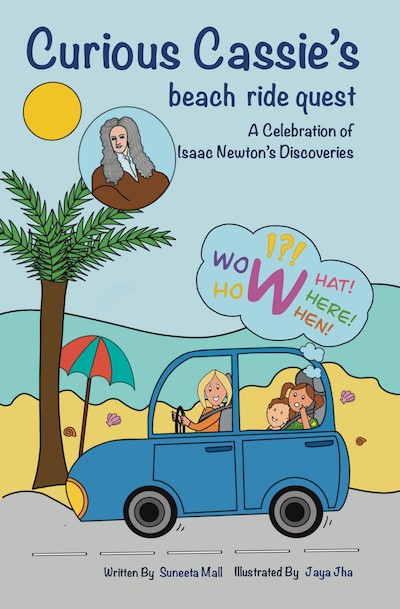
This vision materialized as the "Curious Cassie" book series, with each installment honoring a celebrated scientist by integrating their discoveries into narratives that make learning both enjoyable and engaging. I began with "Curious Cassie's Beach Ride Quest: A Celebration of Isaac Newton's Discoveries", choosing self-publication after encountering the traditional publishing industry's protracted timelines. This path revealed the formidable challenges novice authors face, particularly those writing for younger audiences, and highlighted areas where I needed to evolve as a children's author.

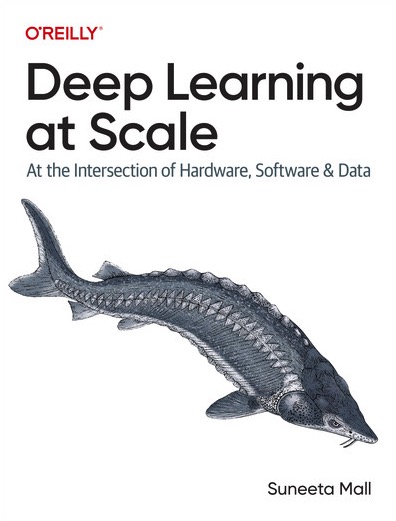
Simultaneously, I authored "Deep Learning at Scale" for O'Reilly, a technical work aimed at machine learning practitioners. This parallel experience provided invaluable insights into the transformative power of professional editorial processes. The iterative feedback cycles—critical analysis, editorial review, and meticulous proofreading—substantially elevated the manuscript's quality, underscoring the improvements needed in my self-published children's literature.

Without a conventional editorial team, I relied on feedback from educational institutions and libraries to refine the "Curious Cassie" series. I recognized that various narrative elements required enhancement: storyline development, curiosity triggers, strategic suspense, and moments that evoke wonder and prompt young readers to question their surroundings. However, professional demands intervened, and this passion project entered an extended hiatus.

Reigniting the Vision with AI

Today, I return with renewed determination to revitalize "Curious Cassie." My current approach leverages artificial intelligence to create an efficient publishing framework, allowing me to focus on my core passion: storytelling. By harnessing technological advancements, I aim to amplify my creative capabilities and bring Curious Cassie's adventures to life in ways that captivate and inspire young minds.

The Transformative Potential of Generative AI in Children's Literature

Generative artificial intelligence is fundamentally reshaping children's literature, equipping authors with sophisticated tools that enhance storytelling craft. By leveraging breakthroughs in natural language processing and machine learning, writers can now develop dynamic narratives and character dialogues calibrated to specific age groups' comprehension levels and interests. These technologies serve as powerful creative allies, helping authors overcome creative blocks by generating contextually relevant content (Brown et al., 2020).

AI-driven platforms are also revolutionizing narrative personalization. By analyzing reader interests and feedback, these systems facilitate the creation of stories that resonate deeply with children, fostering genuine engagement (Zhang et al., 2021). This personalized approach not only captivates young readers but empowers them through stories that reflect their experiences and interests.

Furthermore, generative AI significantly enhances narrative refinement through simulated editorial processes that improve structure, pacing, and emotional resonance, mirroring traditional publishing's collaborative editing (Kucuk & Kucuk, 2022). This iterative feedback loop ensures polished, impactful final products that enrich the reading experience.

However, integrating AI into storytelling presents distinct challenges. Ethical considerations regarding originality, authorship, and narrative homogenization could potentially limit literary diversity (Gunkel, 2018). Authors must carefully balance AI's advantages while preserving their distinctive creative voice.

Immersive Multi-Sensory Storytelling

The integration of visual, auditory, and virtual elements transforms storytelling, creating immersive experiences that engage multiple sensory pathways. Visual components—illustrations and animations—enhance comprehension and emotional connection, particularly among young readers. Research demonstrates that children exposed to illustrated narratives show improved understanding and recall compared to text-only formats (Duke & Pearson, 2002; Hargreaves & North, 1999; Baker, 2013).

Augmented reality (AR) and virtual reality (VR) represent the vanguard of innovative storytelling techniques. AR applications overlay digital content onto physical environments, enabling readers to explore narratives within their surroundings (Billinghurst & Duenser, 2012). VR immerses users in fully realized digital worlds, fostering empathy and emotional engagement by allowing readers to experience stories from varied perspectives (Bailenson et al., 2008).

By engaging multiple sensory channels, these approaches facilitate deeper cognitive processing and stronger narrative connections, fundamentally transforming how stories are created and consumed (Gee, 2003). The evolving potential for hybrid storytelling formats promises to further enrich educational opportunities through narrative (Slater & Wilbur, 1997).

This integration of diverse technologies enables the development of dynamic platforms where the 5 W's (What, When, How, Who, Where) and the 5 C's (Critical thinking, Creativity, Collaboration, Communication, and Citizenship) can be seamlessly woven into educational experiences through storytelling.

Current Limitations and Future Directions

While emerging AI storytelling tools show promise, they remain in nascent stages of development. Platforms like TinyTeller AI, StoryPrompt, Sudowrite, StoryCraft AI, and AIStory offer valuable capabilities but also present limitations. Overreliance on AI-generated content may restrict exposure to diverse storytelling styles (Kim et al., 2024; Han & Cai, 2023), while collaborative AI tools may inadvertently foster dependence rather than independence in creative expression (Fan et al., 2024; Hwang, 2024).

The current digital education landscape often resembles a one-sided monologue, hampering interactive learning and stifling critical thinking. By reimagining education through the lens of interactive storytelling, we can create enriching platforms that empower learners to actively participate in knowledge acquisition.

The Path Forward

I am committed to revitalizing Curious Cassie with AI-enhanced, multi-dimensional storytelling experiences that not only engage young readers but encourage critical thinking about the narratives they encounter. Alongside this revival, I am developing open-source tools to streamline the storybook publishing process, assisting first-time authors in complementing their skills through AI.

In an era saturated with misinformation and superficial content, empowering young minds with critical thinking skills has never been more crucial. Through the synergy of human creativity and artificial intelligence, we can transform children's literature into a powerful vehicle for intellectual growth, fostering the next generation of thoughtful, engaged thinkers.

References

  1. Baker, R. (2013). The Role of Audio in Learning. In J. M. Spector, D. M. Merrill, J. Van Merriënboer, & M. P. Driscoll (Eds.), Handbook of Research on Educational Communications and Technology (pp. 393-408). Springer.

  2. Bailenson, J. N., Beall, A. C., Blascovich, J., & Loomis, J. M. (2008). Immersive Virtual Environment Technology as a Methodological Tool for Social Psychology. In J. M. H. (Ed.), The Handbook of Social Psychology (pp. 100-124). Wiley.

  3. Billinghurst, M., & Duenser, A. (2012). Augmented Reality in the Classroom. In P. Z. Papadopoulos (Ed.), Augmented Reality: Principles and Practice (pp. 219-236). Springer.

  4. Brown, T. B., Mann, B., Ryder, N., Subbiah, M., Kaplan, J., Dhariwal, P., ... & Amodei, D. (2020). Language Models are Few-Shot Learners. Advances in Neural Information Processing Systems, 33, 1877-1901.

  5. Duke, N. K., & Pearson, P. D. (2002). Effective Practices for Developing Reading Comprehension. In A. E. Farstrup & S. J. Samuels (Eds.), What Research Has to Say About Reading Instruction (pp. 205-242). International Reading Association.

  6. Fan, L., Han, S., & Cai, J. (2024). AI-Assisted Creative Writing in Elementary Education: Benefits and Challenges. Journal of Educational Technology and Society, 27(1), 112-125.

  7. Gee, J. P. (2003). What Video Games Have to Teach Us About Learning and Literacy. Computers in Human Behavior, 19(1), 199-219.

  8. Gunkel, D. J. (2018). The Machine Question: Critical Perspectives on AI, Robots, and Ethics. MIT Press.

  9. Han, S., & Cai, J. (2023). TinyTeller: Personalized AI Storytelling for Early Childhood Education. In Proceedings of the International Conference on Educational Technology (pp. 78-92).

  10. Hargreaves, D. J., & North, A. C. (1999). The Social and Applied Psychology of Music. Oxford University Press.

  11. Hwang, G. J. (2024). Collaborative AI Systems in Education: Impact on Student Engagement and Learning Outcomes. Educational Technology Research and Development, 72(1), 45-62.

  12. Kim, J., Lee, S., & Park, H. (2024). Evaluating the Effectiveness of AI-Generated Content in Children's Literacy Development. Reading Research Quarterly, 59(2), 212-229.

  13. Kucuk, S., & Kucuk, U. (2022). The Role of AI in the Evolution of Creative Writing. Journal of Creative Writing Studies, 7(1), 1-15.

  14. Mayer, R. E. (2009). Multimedia Learning. Cambridge University Press.

  15. Slater, M., & Wilbur, S. (1997). A Framework for Immersive Virtual Environments (FIVE): Speculations on the Role of Presence in Virtual Environments. Presence: Teleoperators and Virtual Environments, 6(6), 603-616.

  16. Zhang, Y., Wang, J., & Hu, J. (2021). Personalization in Children's Literature: An AI-Driven Approach. International Journal of Child-Computer Interaction, 28, 100-110.


ChatGPT vs Me: As a Children's Authors

For all the right reasons, large language models have taken the world by storm! It’s pretty impressive what ChatGPT can do - unprecedented coherence, relevance and tone of delivery for a synthetic text generation. Well done OpenAI!

I have to admit I have strongly resisted the urge to use it for purposes beyond joy, and exploration. It's been very hard to abstain, especially because I am extremely passionate about AI and also I work in AI. I truly, madly, deeply, utterly fear that we, as a community of carers of young people, are simply NOT ready for it! It’s the infancy state of due diligence to understand the societal implications and governance around it that scares me the most. I fear that while we, the grown-ups, are probably ready and raring to go at it, it’s our younger generations who are not at all ready for it. Once this genie is out of the bottle, out is just the way! And it’s the repeat of our social media fiasco all over again. Perhaps I am coming from a dark place of seeing how exponentially easily our kids are getting social media bullied and exploited with authorities still scrambling even after the fact on how to contain it!

On a lighter note, selfishly speaking, I also fear depleting my creative and critical thinking abilities in favour of convenience and productivity. If Darwin’s theory is anything to go by, that’s one human talent we should preserve and reinforce, I think. Did I hear you say “But you can still be critical of the presented text?”? Sure, but we are also a Large Language Model in many ways :) - we get biased and we are lazy. Is not laziness the inspiration for many useful inventions of our times?

As a mother of young kids and as someone who believes in lifelong learning, I made a tiny effort last year to write chapter books for early readers covering the discoveries of the great scientists of our past and present. In my debut release, I featured Sir Isaac Newton’s discoveries in a book titled “Curious Cassie's beach ride quest: A Celebration of Isaac Newton's Discoveries”. I tested the book on a sample of 5 kids all ranging from 6-7 years and observed extreme enthusiasm and an increased number of questions thereafter. Mission accomplished, eh?

I failed this morning! I failed to resist the chatGPT urge to see what it would write instead. So here’s Me vs chatGPT, a debut author vs a stochastic parrot:

ChatGPT vs Me: Show me the script

ChatGPT

Prompt

Write a chapter book for 6 year old kids

ChatGPT's Response
Chapter 1: The Magical Forest

It was a beautiful day in the magical forest. The sun was shining and the birds were singing. The trees were tall and green, and the flowers were blooming.

In the center of the forest was a small cottage, where a young girl named Lily lived with her parents. Lily was six years old, and she loved to explore the forest.

One day, while out on a walk, Lily stumbled upon a strange and magical place. It was a clearing filled with glittering diamonds and sparkling jewels.

"Wow!" exclaimed Lily. "I've never seen anything like this before!"
As she reached out to touch one of the diamonds, a bright light shone and a magical fairy appeared before her.

"Hello, Lily," said the fairy. "I am the guardian of the forest, and I have been waiting for you. You have a very special task to complete."

"Me?" asked Lily. "What can I do?"

"There is a wicked witch who has been causing trouble in the forest," explained the fairy. "She has been turning all of the animals into stone, and we need your help to stop her."

"I'll do it!" said Lily, determined to help the animals.

Chapter 2: The Wicked Witch

Lily set out on her journey to find the wicked witch. She followed the fairy's instructions and travelled deep into the forest.
As she walked, she saw that the trees were no longer green and the flowers had withered away. It was clear that the witch had been causing destruction wherever she went.

Finally, Lily came to a dark and gloomy castle. She knew this was where the witch lived.

She tiptoed through the castle, trying not to make a sound. She could hear the witch cackling in the next room.

Lily peeked through the door and saw the witch stirring a bubbling pot. She had a long, crooked nose and sharp, pointed teeth.

"Ah-ha!" shouted the witch, turning to face Lily. "I've been expecting you, little girl. You won't be able to stop me from turning all of the animals into stone!"

But Lily was not afraid. She remembered the fairy's words and knew she had to be brave.

"I won't let you harm any more animals!" said Lily, standing up to the witch.

The witch cackled and raised her wand, but Lily was quick. She grabbed a nearby broom and swung it at the witch, knocking the witches wand out of her hand.

The witch let out a cry of rage and fled the castle, leaving Lily to save the animals.

Chapter 3: The Great Celebration

With the witch gone, Lily was able to use her magic to turn the animals back to normal. The forest was filled with joy and celebration.

The fairy thanked Lily for her bravery and offered to grant her one wish.

"I wish for the forest to always be a happy and safe place," said Lily.

The fairy nodded and waved her wand, granting Lily's wish. From then on, the magical forest was filled with happiness and peace.
Lily returned home to her parents, who were overjoyed to see her safe and sound. They threw a great celebration in her honour, and the whole forest came to join in the fun.

Lily knew that she would always treasure her adventure in the magical forest, and she hoped to have many more adventures in the future.
Verdict

Very impressive choice of theme, tone and word selection. It did not give me a title, so I asked to name the title and it responded with "The Brave Explorer: A Magical Adventure in the Forest." Very cool!

Prompt

Write a chapter book for 6 year old kids on STEM

ChatGPT's Response
Chapter 1: The Science Fair

It was a beautiful day in the town of Maplewood, and Lily was excited for the annual science fair at her school. She had been working on her project for weeks, and she couldn't wait to show it off.

Lily's project was a model of the solar system, complete with miniature planets made out of clay and a sun made out of papier-mâché. She had worked hard to make sure everything was accurate and to explain the orbits of the planets in a way that other kids could understand.

As the science fair began, Lily set up her project at her table and waited for the judges to come by. She was a little nervous, but she knew she had done her best.

The judges were impressed by Lily's project and asked her lots of questions about the solar system. Lily was happy to answer and explain what she had learned.

In the end, Lily's project won first place in the science fair! She was so proud of herself and couldn't wait to show her parents.

Chapter 2: The Technology Club

After the science fair, Lily's teacher, Mrs. Kim, asked her if she would like to join the Technology Club at school. Lily was excited at the chance to learn more about science and technology, and she eagerly accepted.

In the Technology Club, Lily and her friends learned about all sorts of different topics, from coding and robotics to engineering and renewable energy. They built and programmed robots, designed and tested bridges, and learned about how solar panels work.

Lily loved the Technology Club and couldn't wait to go each week. She learned so much and had a lot of fun doing it.

Chapter 3: The Engineering Competition

One day, Mrs. Kim announced that the Technology Club was going to participate in an engineering competition. The students would have to design and build a Rube Goldberg machine, a complicated contraption that could perform a simple task in a creative and convoluted way.

Lily and her friends were up for the challenge and set to work planning and building their machine. They worked together as a team, using their knowledge of physics, engineering, and problem-solving to make their machine work.

Finally, the day of the competition arrived. Lily and her friends were nervous but excited to see how their machine would perform.

As they presented their machine to the judges, it worked perfectly, performing the simple task with a series of intricate steps. Lily and her friends were thrilled when they were announced as the winners of the competition!

Chapter 4: The Future Scientists

After the engineering competition, Lily and her friends in the Technology Club knew that they wanted to continue exploring science and technology in the future. They were already thinking about new projects and competitions they could participate in.

Lily knew that she wanted to be a scientist when she grew up, and she was grateful for all of the opportunities she had had to learn and explore in the Technology Club.

She knew that no matter what she did in the future, she would always have a passion for science and technology and the desire to learn more.
Verdict

Nice plot setting, nice choice of theme, and context. Nice job. I find it's very peripheral, explaining a lot about the setting but nothing about science. Maybe it’s my prompt. Let's give it another go.

Prompt

Write a 6-7 year old kids’ book on Sir Isaac Newton's discoveries with Cassie as a protagonist

ChatGPT's Response
Cassie and the Apple Tree

Cassie was a curious little girl who loved to learn about the world around her. One day, she was walking through her backyard when she saw an apple fall from a tree.

"Hmm, I wonder why that happened?" Cassie thought to herself. She climbed up the tree to see if she could find out more.

As she reached the top, she saw a man standing under the tree. It was Sir Isaac Newton! Cassie had heard of him before. He was a very smart man who had made many important discoveries.
"Hello, Cassie," Sir Isaac said. "I see you're curious about the apple."

"Yes, I am," Cassie replied. "Why did it fall to the ground?"
"Ah, that's a good question," Sir Isaac said. "I figured out that there is a force called gravity that pulls objects towards the ground. That's why the apple fell."

Cassie was amazed. "Wow, that's so cool!" she exclaimed.
Sir Isaac smiled. "I also made many other discoveries," he told Cassie. "Like the laws of motion, which explain how objects move and change speed. And I invented calculus, which helps us understand how things change over time."

Cassie's head was spinning with all this new information. She couldn't wait to learn more about Sir Isaac's discoveries.

"Thank you for telling me all about this, Sir Isaac," Cassie said. "I can't wait to learn more!"

"You're welcome, Cassie," Sir Isaac replied. "I'm glad you're interested in learning. Remember, the more you learn, the more you'll discover about the world around you."

Cassie smiled and climbed back down the tree, excited to keep learning and discovering new things.
Verdict

Nice choice of words, context is spot on, and tone of delivery is nice too. Some of the phrases are spot on. "Wow, that's so cool!" she exclaimed.” is something I have used too.

Apple and Newton are joined together forever. Cliché, my dear parrot! Cliché! Well done still. Maybe I like more challenges given to the kids, but I still feel it’s too shallow and lacks details. Let’s give it more work and see what ChatGPT does.

Prompt

Write a 6-7 year old kids chapter book on Sir Isaac Newton's discoveries with Cassie as the protagonist with illustrations

ChatGPT's Response
Chapter 1: Cassie and the Apple Tree

[Illustration: Cassie is standing in her backyard, looking up at an apple falling from a tree.]

Cassie was a curious little girl who loved to learn about the world around her. One day, she was walking through her backyard when she saw an apple fall from a tree.

"Hmm, I wonder why that happened?" Cassie thought to herself. She climbed up the tree to see if she could find out more.

[Illustration: Cassie is climbing up the tree, with a determined look on her face.]

As she reached the top, she saw a man standing under the tree. It was Sir Isaac Newton! Cassie had heard of him before. He was a very smart man who had made many important discoveries.

"Hello, Cassie," Sir Isaac said. "I see you're curious about the apple."

"Yes, I am," Cassie replied. "Why did it fall to the ground?"

"Ah, that's a good question," Sir Isaac said. "I figured out that there is a force called gravity that pulls objects towards the ground. That's why the apple fell."

[Illustration: Sir Isaac is pointing to a diagram of the earth and the apple, with an arrow labeled "gravity" pointing from the earth to the apple.]

Cassie was amazed. "Wow, that's so cool!" she exclaimed.

Chapter 2: The Laws of Motion

After learning about gravity, Cassie couldn't wait to find out more about Sir Isaac's discoveries. She asked him to tell her more.

"I also made many other discoveries," Sir Isaac said. "Like the laws of motion, which explain how objects move and change speed."

[Illustration: Sir Isaac is holding a book labeled "Laws of Motion," with diagrams of moving objects in the background.]

Cassie was fascinated. Sir Isaac explained that there are three laws of motion:

    Objects at rest stay at rest, and objects in motion stay in motion with the same speed and direction, unless acted upon by a force.
    The force needed to change the motion of an object is equal to the mass of the object times its acceleration.
    For every action, there is an equal and opposite reaction.

[Illustration: Sir Isaac is pointing to a chalkboard with the three laws of motion written on it, with illustrations of objects in motion on either side.]

"These laws help us understand how objects move and behave in the world around us," Sir Isaac said.

Chapter 3: Calculus

Cassie couldn't believe how much she was learning from Sir Isaac. She asked him if there was anything else he had discovered.

"Yes, I also invented calculus," Sir Isaac said. "It helps us understand how things change over time."

[Illustration: Sir Isaac is holding a book labeled "Calculus," with a diagram of a curve on the cover.]

Cassie was a little confused. "What do you mean?" she asked.

Sir Isaac explained that calculus is a way of studying how things change. "For example, we can use calculus to understand how fast a ball is rolling down a hill, or how fast a plant is growing," he said.
[Illustration: Sir Isaac is pointing to a graph with a curve on it, with a ball rolling down a hill in the background.]
Cassie was amazed. "That's so cool!" she exclaimed.
Chapter 4: The End
After learning all about Sir Isaac's discoveries, Cassie was even more excited to keep learning and discovering new things. She thanked Sir Isaac for all of his help and said goodbye.
"Remember, Cassie," Sir Isaac said as she walked away. "The more you learn, the more you'll discover about the world around you."
[Illustration: Cassie is waving goodbye to Sir Isaac, with a big smile on her face.]
Cassie smiled and waved, excited to keep exploring and learning. She knew that there were so many more mysteries to solve and discoveries to be made.
Verdict

I love this line "The more you learn, the more you'll discover about the world around you." ChatGPT, You can be nice if not exploited! I liked the mention of calculus. It’s a brilliant thought but I stopped at algebra in my book!

However, I remain unsatisfied given the lack of detail and meat around the topic. I feel, for now, human writing is more creative, rich and informative! I am glad that’s the way it is!

Me! Me!

Title: Curious Cassie's beach ride quest: A Celebration of Isaac Newton's Discoveries

[Illustration: Cassie is riding in a car with her family! She is buzzing with interesting curious keywords like Wow, What, How, When, Where! Sir Isaac is featured in the book.]

Here's a sample of my book. It shows 1st chapter of the 3-chapter book.

I am just a debut author, writing out of hobby. I am profoundly impressed by authors who have written brilliant books to teach, guide and shape our children. I hope we will continue to create far-enriched content to shape ourselves and our future with or without AI - just as long as we are in control.

Thanks a lot for reading! If you ever see any value in spreading the word about my book or procuring it for your loved ones then please do so, I would be thrilled!

Disclaimer: This is a personal post. Views shared are my own and do not represent my employers.

Deep Learning at Scale - O'Reilly Book Launch

After two years of intensive work, I'm excited to announce the release of "Deep Learning at Scale: At the Intersection of Hardware, Software, and Data" published by O'Reilly Media.

This comprehensive guide bridges the gap between research and production, providing practical approaches to scaling deep learning systems. Through hands-on exercises and real-world examples, readers learn to navigate the complexities of hardware optimization, distributed training, and efficient deployment—essential skills for building systems that scale both effectively and efficiently.

Deep Learning at Scale - An O'reilly Book

Available Formats

Digital Edition

Kindle: Amazon US | Amazon AU

Paperback: Amazon US | Amazon AU

O'Reilly Learning Platform

30-Day Trial: Access on O'Reilly

Learn More

For detailed information about the book's content and resources, visit the project page.

Reading List

A curated collection of books that have shaped my thinking across technology, leadership, creativity, and life. These are books I've genuinely enjoyed and found valuable, organized by theme.


Artificial Intelligence & The Future


Machine Learning & Deep Learning


Statistics & Mathematics


Software Engineering & Systems


Kubernetes & Cloud Native


Leadership & Communication

  • Leadership on the Line by Ronald A. Heifetz & Marty Linsky How to navigate the dangers and challenges of leadership while staying effective and maintaining integrity.

  • Leadership Is Language by L. David Marquet How what you say (and don't say) shapes leadership effectiveness and organizational outcomes.

  • The Next Conversation by Jefferson Fisher How to argue less and talk more—practical approaches to productive dialogue.

  • Wise Guy: Lessons from a Life by Guy Kawasaki Life lessons and wisdom from Silicon Valley's legendary evangelist.


Thinking & Decision Making


Innovation & Entrepreneurship

  • The Innovator's Dilemma by Clayton M. Christensen Why great companies fail when disruptive technologies emerge.

  • Zero to One by Peter Thiel & Blake Masters Contrarian thinking about creating new value.


Writing & Creativity

  • If You Want to Write by Brenda Ueland A timeless classic on creativity, artistic independence, and finding your voice.

Education


Parenting

  • The Explosive Child by Ross W. Greene A collaborative problem-solving approach for understanding and parenting easily frustrated, chronically inflexible children.

  • Becoming Brilliant by Roberta Golinkoff & Kathryn Hirsh-Pasek Research-backed approach to nurturing children's development.

  • Thinking Parent, Thinking Child by Myrna B. Shure Practical problem-solving approaches for parents.

  • The Psychology of Babies by Lynne Murray Understanding early development through the lens of relationships.


Science & Nature

  • The End of Ice by Dahr Jamail Bearing witness to climate disruption and finding meaning in the crisis.

  • The Second Kind of Impossible by Paul Steinhardt The extraordinary quest to discover quasicrystals—a new form of matter.